
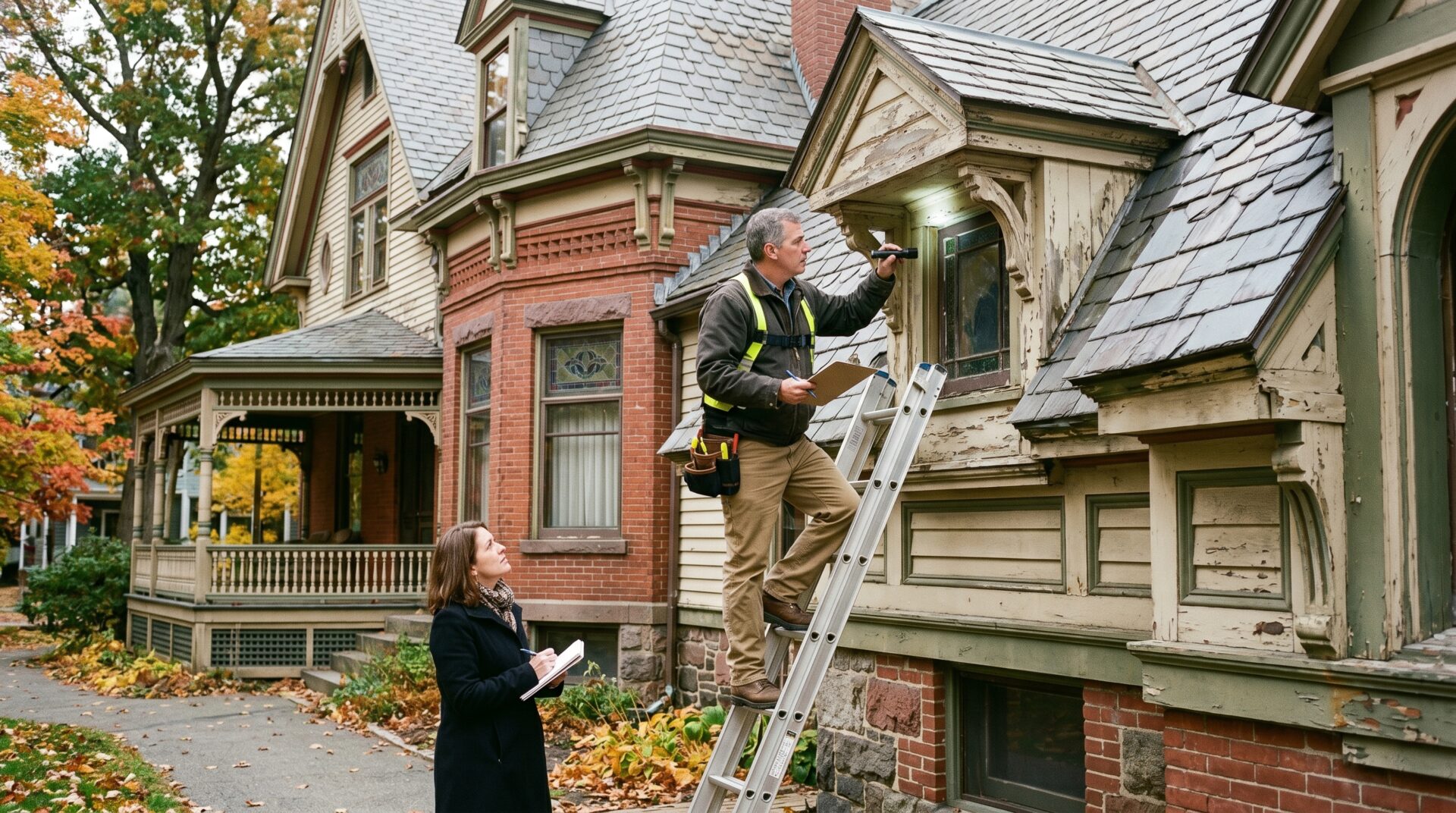

When you’re considering purchasing a historic home, you’re not just buying a house; you’re becoming a steward of architectural heritage. These properties, often built before modern building codes, embody craftsmanship from eras like Victorian, Craftsman, or Colonial Revival, with features such as intricate gingerbread trim, stained glass windows, and hand-hewn beams that whisper stories of the past. Yet beneath that charming facade, those original hardwood floors, ornate plaster medallions, and exposed brick walls, lurk decades of wear, outdated systems, and potentially hazardous materials awaiting revelation. A specialized inspection differs greatly from standard home evaluations, requiring experts who understand period construction methods, material behaviors over time, and preservation guidelines. What you don’t know can prove costly, turning your dream restoration into a financial nightmare through unexpected repairs or code violations.
Buyer inspections historic homes require certified inspectors with heritage building assessment expertise, often featuring backgrounds in architectural history or membership in organizations like the International Association of Certified Home Inspectors (InterNACHI) or the American Society of Home Inspectors (ASHI) with historic specialties, unlike standard inspections for newer homes that focus on code-compliant systems. These professionals use non-destructive techniques like borescopes, moisture meters, and infrared thermography to uncover issues without damaging irreplaceable features. Engaging such an expert early protects your investment, informs negotiations, and ensures compliance with local historic district ordinances.
Key Takeaways
- Historic homes require inspectors with specialized knowledge of pre-code construction methods and period-appropriate materials like old-growth timber.
- Hidden hazards include knob-and-tube wiring, lead pipes, asbestos insulation, and concealed structural deterioration beneath cosmetic renovations.
- Essential inspections cover foundations, roofing systems, exterior wood, outdated electrical systems, and health risks like lead paint and asbestos.
- Balancing preservation standards with safety codes requires inspectors familiar with maintaining historical character while addressing critical deficiencies.
- Prioritize findings by safety impact, create phased renovation strategies addressing life-safety issues first, and use reports for repair negotiations.
Understanding the Unique Challenges of Historic Properties

While modern homes follow standardized building codes, historic properties present distinct inspection challenges rooted in construction techniques that predate contemporary regulations. When you’re considering historic home inspections, with Gulf View Inspections, you’ll encounter construction methods and materials that require specialized knowledge to evaluate properly. These properties don’t conform to today’s building practices, demanding inspectors who understand period-specific craftsmanship and potential vulnerabilities.
Inspecting historic homes requires additional time because deterioration often hides beneath cosmetic renovations. You’ll need to examine interconnected systems that evolved over decades, where one component’s failure can cascade throughout the structure. Your inspector must recognize how original materials age and identify where updates compromise structural integrity.
You’re joining a community of stewards who understand that thorough evaluation protects both your investment and architectural heritage. Outdated plumbing and electrical systems present safety concerns requiring careful assessment against modern standards, while environmental hazards like lead paint and asbestos demand professional attention before you take ownership.
Essential Components of a Comprehensive Historic Home Inspection
Because historic homes contain layers of construction spanning decades or centuries, like a 1900 core with 1950s additions and 1980s updates, your detailed inspection must systematically evaluate critical components in their proper architectural context, often phase-by-phase. Begin with the foundation, examining for cracks wider than 1/4-inch, efflorescence (white mineral deposits signaling water migration), bowing walls, and standing water that signal structural compromise requiring immediate intervention, such as helical piers or helical tiebacks. You’ll need to assess the roofing system’s integrity, identifying missing shakes on wood shingle roofs, deteriorated copper flashing on slate tiles, or brittle asphalt roll roofing that threatens moisture infiltration and interior plaster damage.
Your inspector should probe exterior wood clapboard or shingle siding for soft spots (indicating rot), peeling paint layers revealing multiple lead-based coats, and insect damage from carpenter ants or termites, testing outside surface appearances to reveal hidden deterioration via resistance meters or sounding taps. Electrical systems demand specialized attention: fuse boxes with Type-S fuses, ungrounded two-prong outlets, or aluminum branch wiring from the 1960s-70s pose significant safety hazards requiring modern upgrades like GFCI protection while respecting historical character, perhaps concealing panels behind period millwork.
Don’t overlook the hidden risks of older construction: multi-layered roofing exceeding code weight limits, chimneys with spalling brick from sulfation, or attics with vermiculite insulation potentially containing asbestos. Your inspection must identify lead paint via XRF testing and asbestos via polarized light microscopy sampling, with clear remediation recommendations from EPA-certified professionals. This all-encompassing approach, often including drone surveys for steep roofs or sewer scopes for clay tile drains, protects your investment while honoring the home’s architectural heritage and ensuring your family’s safety through prioritized action lists.
Identifying Hidden Hazards in Older Construction
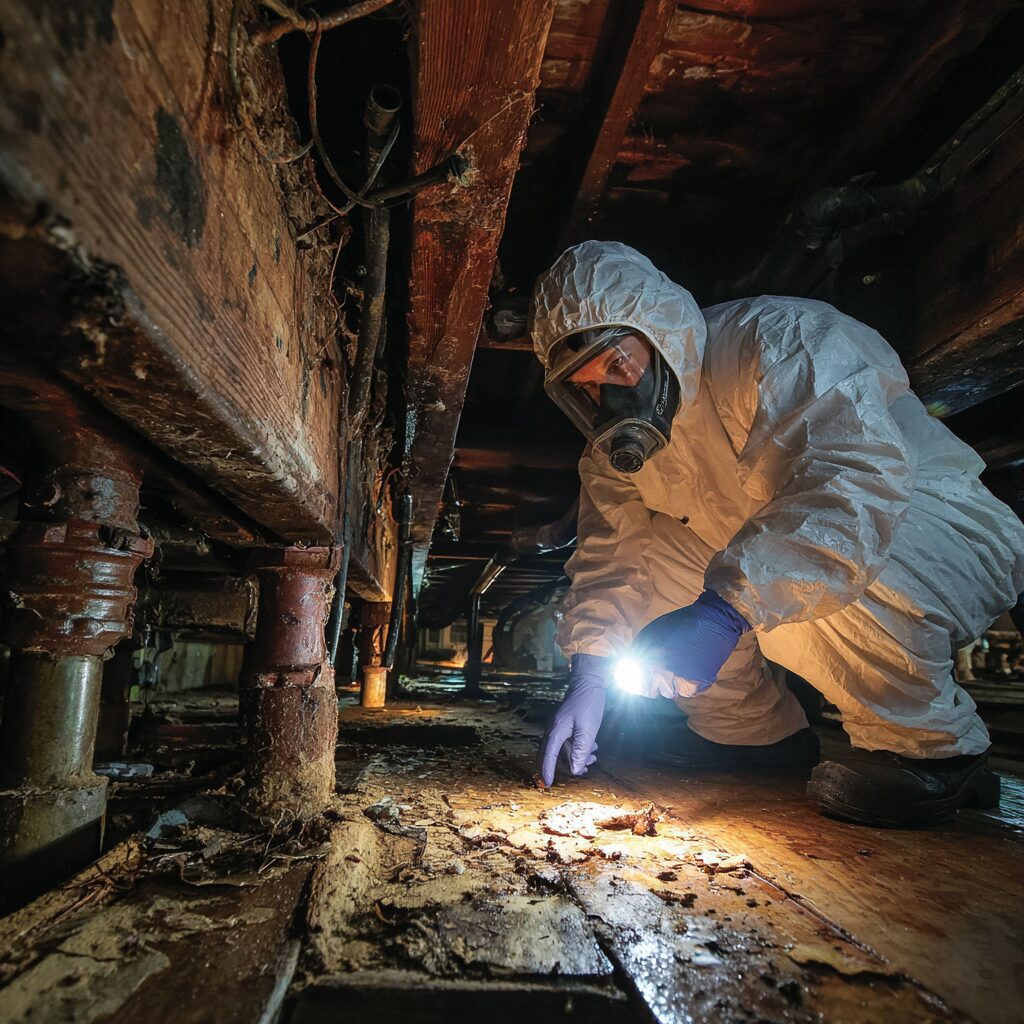
Hidden beneath decorative plaster cornices, wainscoting, and original woodwork, older construction conceals hazards that demand your immediate attention during pre-purchase evaluation. As a steward of architectural heritage, you’ll need to identify electrical systems that haven’t evolved with modern safety standards: exposed knob-and-tube wiring (rubber-insulated from 1880-1940) dried out and arcing-prone, undersized 60-amp service panels overwhelmed by modern appliances, or Federal Pacific Stab-Lok breakers known for failure rates up to 30%. Your inspector should investigate lead pipes (solder joints pre-1986), galvanized steel lines scaling internally, and lead-based paint on pre-1978 surfaces, especially chewable areas like windowsills, compromising water quality and your family’s health via neurotoxic exposure.
Asbestos lurks in insulation around steam pipes, 9×9-inch floor tiles (pre-1980), textured “popcorn” ceilings, and asphalt-based roofing shingles, requiring professional abatement protocols when disturbed to avoid mesothelioma risks. You’re also confronting mold colonization (Stachybotrys chartarum, the “black mold”) from chronic water intrusion through failing cedar shake roofs, corroded plumbing joints, or rising damp in stone foundations, issues that escalate remediation costs rapidly into tens of thousands. Foundation settling from expansive clay soils or concealed framing deterioration (e.g., notching joists for HVAC ducts) often emerges during renovation, potentially undermining structural integrity and triggering $50,000+ repairs. Radon gas infiltration through rubble foundations in certain geologies adds lung cancer risks, detectable only via long-term testing.
Your thorough inspection protects both your investment and the home’s historical significance while ensuring occupant safety through informed remediation planning, cost estimates, and vendor referrals for licensed contractors experienced in historic work.
Evaluating Structural Integrity and Original Materials
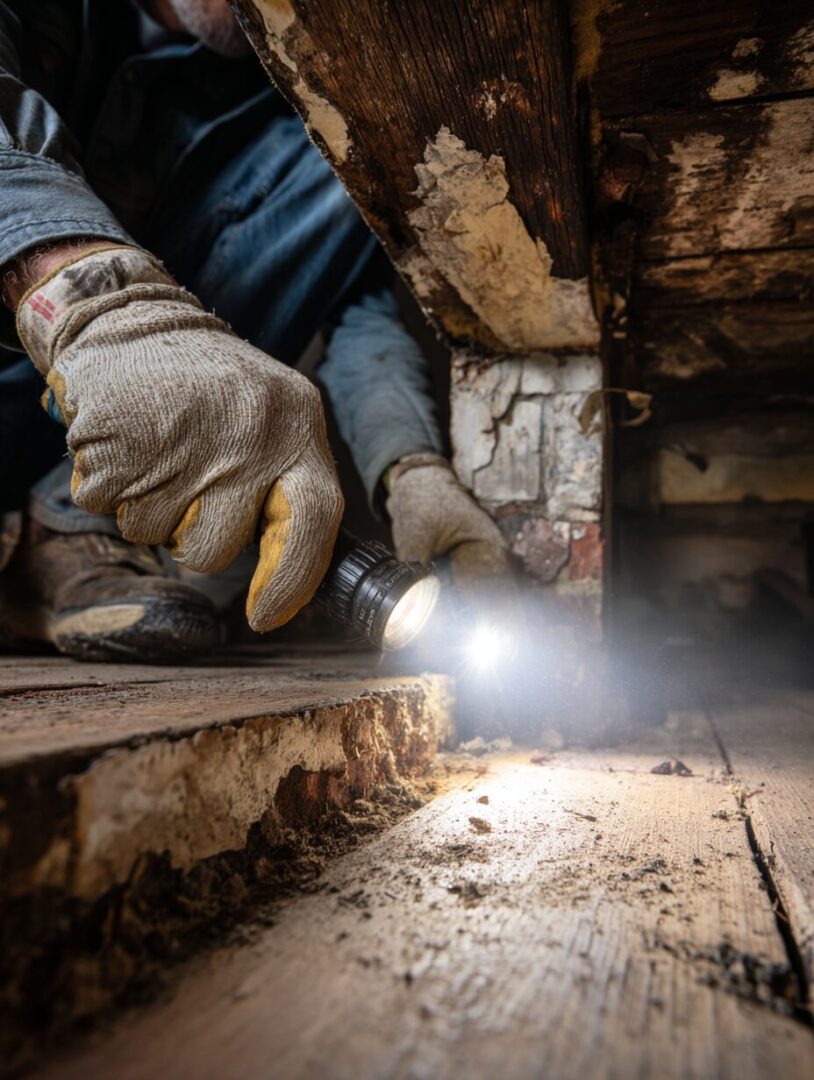
In addition to surface hazards, your historic home’s structural integrity demands systematic evaluation of load-bearing components and heritage materials that define its architectural character. Foundation assessment takes priority; you’ll need documentation of cracks, deteriorating mortar, and water intrusion patterns that threaten stability. Your inspector must recognize that original materials like old-growth lumber and lime mortar require preservation-specific maintenance protocols distinct from contemporary construction.
Crucial evaluation points include:
- Foundation examination for structural cracks, loose mortar joints, and moisture penetration
- Original materials assessment of old-growth timber strength and lime mortar condition
- Hidden deterioration detection behind renovations through probing and moisture mapping
- Settlement pattern analysis in walls, floors, and ceiling planes
- Heritage component verification of load-bearing capacity using period-appropriate methods
Cosmetic updates frequently conceal underlying deterioration, making thorough probing vital. Gulf View’s specialized knowledge of historic construction techniques guarantees accurate identification of structural concerns while respecting the home’s architectural heritage and material authenticity.
Assessing Outdated Systems That Require Modernization
Why do historic homes present unique modernization challenges that demand specialized assessment protocols? Built before the National Electrical Code (first 1897) or Uniform Plumbing Code (1928), they feature systems incompatible with today’s 200-amp services and PEX piping. You’ll encounter outdated electrical systems with knob-and-tube wiring (ceramic knobs insulating hot wires through joists), brittle from age, cloth Romex from the 1940s, mouse-chewed in attics, or fuse panels lacking arc-fault protection, creating fire hazards requiring immediate upgrades to copper wiring and square-D breakers while preserving pocket doors and chandeliers.
Your plumbing evaluation must identify lead goosenecks, polybutylene pipes (1978-1995 failure-prone), and galvanized components corroding internally (brown water staining fixtures), necessitating replacement with copper or CPVC. Heating systems like coal-to-gas converted gravity hot air furnaces lack modern safety features, unlined chimneys risk creosote fires, while oil tanks buried pre-1980 may be leaking PCB contaminants. Cooling? Original swamp coolers or none at all overload modern window units.
You’ll need to examine roofing structures for code compliance: wood shingles voiding insurance policies, flat tar-and-gravel decks ponding water. Your inspection must document asbestos transite siding or lead paint, requiring specialized abatement. As fellow preservationists, we recognize balancing heritage conservation (no vinyl windows in historic districts) with safety modernization via tax credits like the 20% federal rehabilitation credit. Schedule thorough assessments documenting these critical systems, ensuring your historic property maintains its character while meeting NEC 2023, UPC updates, and protecting your investment’s integrity.
Documenting Moisture Issues and Environmental Concerns
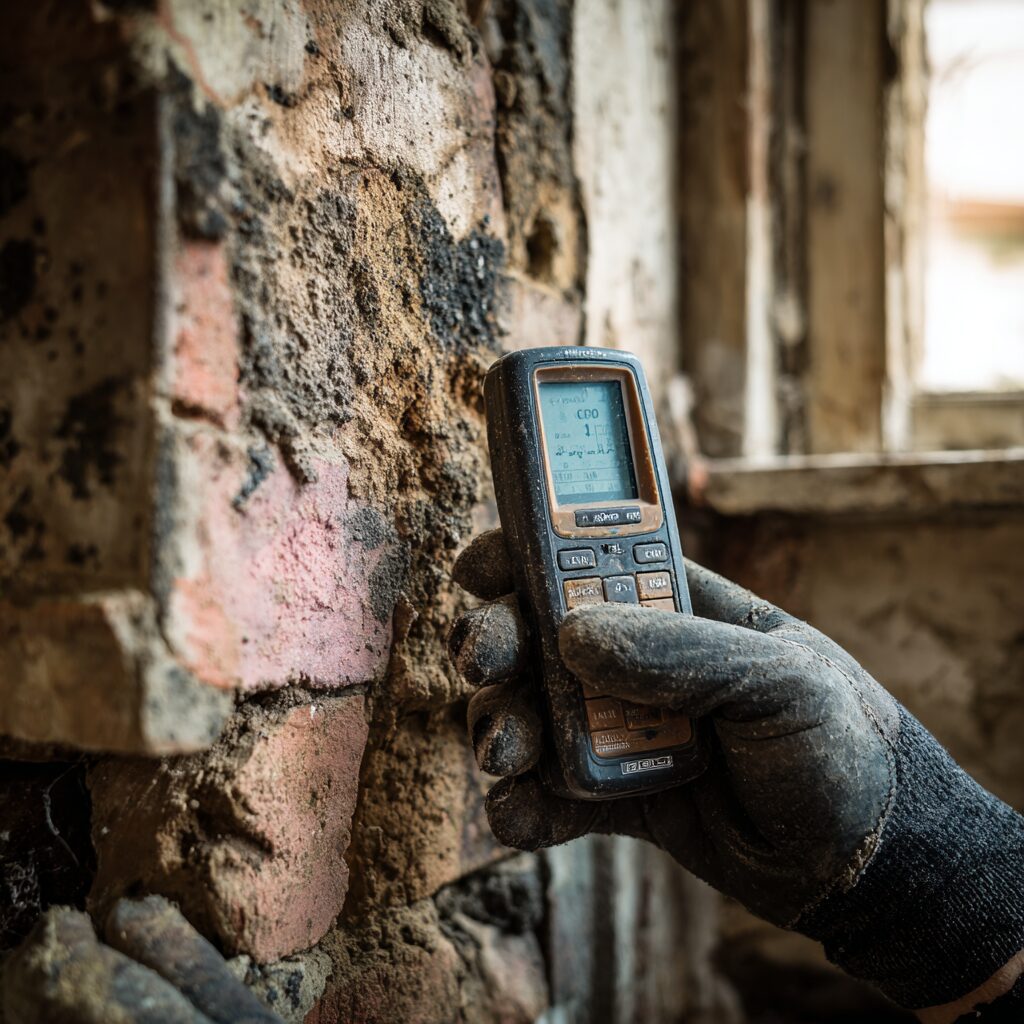
Moisture infiltration threatens historic homes’ structural integrity more severely than conventional properties due to original building materials’ heightened vulnerability, lime plaster dissolves, and old-growth wood delaminates. You’ll need extensive documentation of moisture issues throughout basements (sump pump failures), attics (ice dams on slate roofs), crawl spaces (ventilation blocked by insulation), and behind period walls using moisture meters (pin-type for wood >20% MC), thermal imaging (cool spots indicating leaks), and hygrometers.
Your inspection must address critical environmental concerns:
-
Lead paint assessment in homes constructed before 1978 via swab kits or XRF guns, documenting friable layers on railings/stair treads.
-
Asbestos identification in popcorn ceilings, boiler insulation, and mastic adhesives; lab sampling per EPA AHERA protocols.
-
Humidity level monitoring 40-50% RH to prevent mold while avoiding over-drying hygroscopic materials like plaster.
-
Water intrusion documentation: tide lines in cellars, rot at sill plates, efflorescence on chimney bases, psychrometric charts for crawl spaces.
-
Ventilation system evaluation: whole-house fans vs. HRVs, ensuring airflow without drafts harming wallpaper.
Document visible indicators systematically, buckled hardwoods signal subfloor rot, as they’ll reveal underlying deterioration requiring immediate mitigation like French drains or dimple mat under slabs. Schedule with certified inspectors to protect your historic property investment through thorough, conservation-minded assessment practices, including radon canisters and indoor air quality CO2 readings.
Balancing Preservation Requirements With Safety Standards
In addition to addressing moisture and environmental hazards, you’ll confront the complex interplay between mandated preservation standards and contemporary safety code requirements. When you conduct buyer inspections historic homes, you’re maneuvering designation restrictions that often limit structural alterations while simultaneously addressing critical safety deficiencies. Your electrical systems assessment becomes particularly challenging, as outdated knob-and-tube wiring or ungrounded circuits may violate current codes, yet replacement must respect historical fabric and character-defining features.
You’ll need to understand how local landmark commissions review proposed upgrades, guaranteeing your renovation plans achieve code compliance without compromising architectural integrity. This balance protects both your investment and our shared cultural heritage. Work with inspectors who recognize preservation conflicts and can identify solutions that honor historical significance while establishing modern safety thresholds. Your informed decision-making guarantees the home remains functional, secure, and authentic, preserving its legacy for future stewards within our preservation-minded community.
Making Informed Decisions After Your Inspection Report

Once you’ve received your thorough inspection report, prioritize findings by their immediate impact on structural integrity and occupant safety, rather than their longer-term preservation concerns. Your report functions as a roadmap for stewarding your historic property responsibly while maintaining its authentic character.
Critical assessment areas for older homes include:
- Hazardous materials: Lead paint and asbestos require professional remediation before occupancy
- System obsolescence: Knob-and-tube wiring, galvanized plumbing, and gravity furnaces demand modernization
- Structural vulnerabilities: Foundation settlement, deteriorated framing, and compromised load-bearing elements need immediate attention
- Moisture intrusion: Hidden deterioration in attics, crawl spaces, and wall cavities threatens long-term stability
- Landmark constraints: Preservation ordinances may dictate approved materials and modification procedures
Develop a phased renovation strategy that addresses life-safety issues first while respecting historical significance. Your inspection empowers you to negotiate repairs, budget accurately, and join the community of conscientious historic homeowners committed to preserving architectural heritage.
Frequently Asked Questions
What to Inspect When Buying an Old House?
Carefully check critical components: foundation fissures, roof resilience, electrical efficiency, plumbing preservation, and window wellness. You’ll safeguard your heritage investment while honoring the home’s historic character. These inspections protect your family’s future and our shared architectural legacy.
Do Buyers Typically Go to Inspections?
Yes, you should attend your historic home inspection. Being present lets you understand original materials, aging systems, and preservation needs firsthand. You’ll ask questions, build rapport with your inspector, and make informed decisions about protecting your future heritage property.
What Things Are Big Red Flags in a Home Inspection?
Major red flags you’ll want to watch for include foundation movement with stair-step cracks, water intrusion causing mold, outdated electrical systems like knob-and-tube wiring, deteriorating roofing, and hazardous materials such as lead paint or asbestos requiring professional remediation.
What Are the 4 Types of Inspections?
You’ll need four inspections: a general home evaluation for structural integrity, specialized system assessments for outdated electrical/plumbing systems, pest inspections targeting wood-destroying organisms, and environmental testing for lead paint and asbestos, protecting your historic home’s legacy while ensuring safety.
Conclusion
You’ve examined the structural systems, you’ve documented the hazards, and you’ve assessed the preservation needs with Gulf View Inspections. Now you’ll transform your inspection findings into a strategic action plan that honors your home’s heritage while ensuring modern safety. You’ll prioritize critical repairs, you’ll respect original craftsmanship, and you’ll balance conservation principles with practical functionality. Your historic property demands specialized care from Gulf View Inspections; you’ll protect its architectural integrity while securing its future for generations ahead. Inspected once, inspected right.